
Alpine Field RecordGround · Forage · Herd

Proof From The Field™

Show Your Work.

Every ranch is different. We check the question, weather, numbers, and limits before we say what happened.

Proof From The Field™
Documentation in preparation Release after review

Alpine Field Evidence Library™

We listen first. Then we check the facts.

We listen to what your ranch needs to know. We keep clear records so you can see the result, how we checked it, and what really happened.

Public result

Not released

Source record

Required

Publication rule

Context first

01

The question

What was the farm or ranch trying to learn?

Awaiting source
02

The operation

What kind of operation was it, where was it, and what crop or cattle were involved?

Awaiting source
03

The starting point

What was happening before the trial began?

Awaiting source
04

What was used

What Alpine plan or input was used, and what job was it meant to do?

Awaiting source
05

The trial plan

How much was used, how was it used, how long did the trial run, and under what conditions?

Awaiting source
06

What we tracked

Which numbers and field notes were recorded during the trial?

Awaiting source
07

What the record shows

What do the approved numbers show, apart from personal opinion?

Awaiting source
08

The money question

Any dollar estimate stays separate from measured results and lists its assumptions.

Awaiting source
09

Limits

How many acres or animals were involved, how long did it run, and why might another operation see a different result?

Awaiting source
10

Source records

The approved reports, lab work, data sheets, and producer statements behind the record.

Awaiting source

The first checked Field Trial Dossier™ is coming soon. Each one will show where it started, what happened, how long we watched, and what the records can and cannot say.

Source Records Under Review

The source files are here. The limits stay with them.

These records help shape SoilEDGE™ and PlantEDGE™ questions. They are not yet verified Alpine Field Trial Dossiers™. Each result stays labeled by who reported it, what the source shows, and what is still missing.

Alpine-facing labels use the new names. The original source PDFs keep their legacy wording because evidence files must not be rewritten.

Source 01 · Laboratory Analysis

Document received

One material sample. One dated report.

A&L Plains reported the composition of one submitted sample on March 23, 2016. The report lists 5.70% moisture and reports all values on an as-received basis.

0.67% nitrogen

13.4 lb of nitrogen per ton in the submitted material sample.

Reported analyteConcentrationPer ton
Nitrogen0.67%13.4 lb/ton
Phosphate2.75% P₂O₅55.0 lb/ton
Potash1.45% K₂O28.9 lb/ton
Calcium1.72%34.4 lb/ton
Iron9,500 ppm19.0 lb/ton
Magnesium0.58%11.6 lb/ton
Sulfur0.16%3.2 lb/ton

This report does not show a soil before-and-after change, a 90-day trial, or nitrogen moving from 3% to 13%. It also does not prove that the current Alpine blend is identical to the tested legacy sample.
Source 02 · PlantEDGE™

Three legacy crop summaries.

These are publisher-supplied case summaries. They are useful leads for future work, but they are not independent or fully documented trials.

Open original case summaries

01 · Producer summary

West Texas cotton

Two reported 80-acre halves under one center pivot. Both sides list the same balanced fertilizer rate. The legacy material side lists 1,000 lb/acre.

The summary reports 723 lb/acre on the control and 1,124 lb/acre on the material side.

What is missing: Year, variety, baseline, harvest method, replication, weather record, and signed producer release were not supplied.

02 · Producer summary

Idaho potatoes

Two reported 40-acre plots with the same potato variety. The comparison used different nitrogen rates and different harvest dates.

The summary reports 32,000 lb/acre on the control and 34,000 lb/acre on the material side.

What is missing: The nitrogen program and harvest timing differed, so the summary does not isolate the effect of the legacy material.

03 · Producer summary

California alfalfa

Two reported 40-acre irrigated areas. The comparison lists different nitrogen programs and 1,000 lb/acre of legacy material on one side.

The summary reports 3.2 versus 4.1 tons/acre per cutting and 18% versus 21% protein.

What is missing: Year, cutting count, sampling method, laboratory report, baseline, replication, and signed producer release were not supplied.

Source 03 · SoilEDGE™ + PlantEDGE™

Rayner Ranches producer letter.

A March 13, 2024 letter from Rayner Ranches LLC, signed by Jack Rayner, reports a zeolite and humate mix used at 150–200 lb/acre on Rayner Farms in Midnight, Mississippi.

Producer letter · March 13, 2024 · Rayner Ranches LLC

Signed by Jack Rayner · Producer-reported

15%

Lower nitrogen application reported.

+15–18

Corn bushels per acre reported, described as an 8% increase.

70 → 80

Soybean bushels per acre reported.

The letter gives a date and producer signature. It does not include acreage, crop year, a baseline sheet, application timing, a full protocol, harvest or measurement method, replication, or statistical review. These numbers are producer-reported, not verified Alpine results.

Historical Product Bulletin

What the legacy material was designed to support.

01

Holding water and nutrients in the root zone

02

Supporting soil structure and aeration

03

Supporting roots and soil microbes

04

Reducing nutrient movement out of the root zone

These are historical intended-use statements from the supplied bulletin. Alpine does not present them as guaranteed outcomes. They help define what future SoilEDGE™ and PlantEDGE™ field records should measure.

HerdEDGE™ Evidence Status

No cattle or herd trial record was included in this source package. HerdEDGE™ remains in documentation preparation until a livestock record is received and approved.

No herd result published

Alpine Field Performance Dossier™

Documentation in preparation.

Future approved field trials and documented producer evaluations will appear here one dossier at a time. No number, location, producer, date, university, chart, or result is released before the source record supports it.

Field Trial Dossier™

First verified record.

Documentation is in preparation. No outcome, operator, location, or date will appear until the approved source record is cleared.

Publication status

Awaiting approved source

All evidence

The dossier structure is ready.

Source-gated release

This placeholder shows what producers will be able to review once a record is approved. Each section is intentionally blank until its source, context, and disclosure are verified.

BaselinePending
ConditionsPending
Application ProtocolPending
Measurement WindowPending
Measured OutcomesPending
LimitationsPending
Supporting DocumentationPending
Verification StatusPending
01

The question

What was the farm or ranch trying to learn?

02

The operation

What kind of operation was it, where was it, and what crop or cattle were involved?

03

The starting point

What was happening before the trial began?

04

What was used

What Alpine plan or input was used, and what job was it meant to do?

05

The trial plan

How much was used, how was it used, how long did the trial run, and under what conditions?

06

What we tracked

Which numbers and field notes were recorded during the trial?

07

What the record shows

What do the approved numbers show, apart from personal opinion?

08

The money question

Any dollar estimate stays separate from measured results and lists its assumptions.

09

Limits

How many acres or animals were involved, how long did it run, and why might another operation see a different result?

10

Source records

The approved reports, lab work, data sheets, and producer statements behind the record.

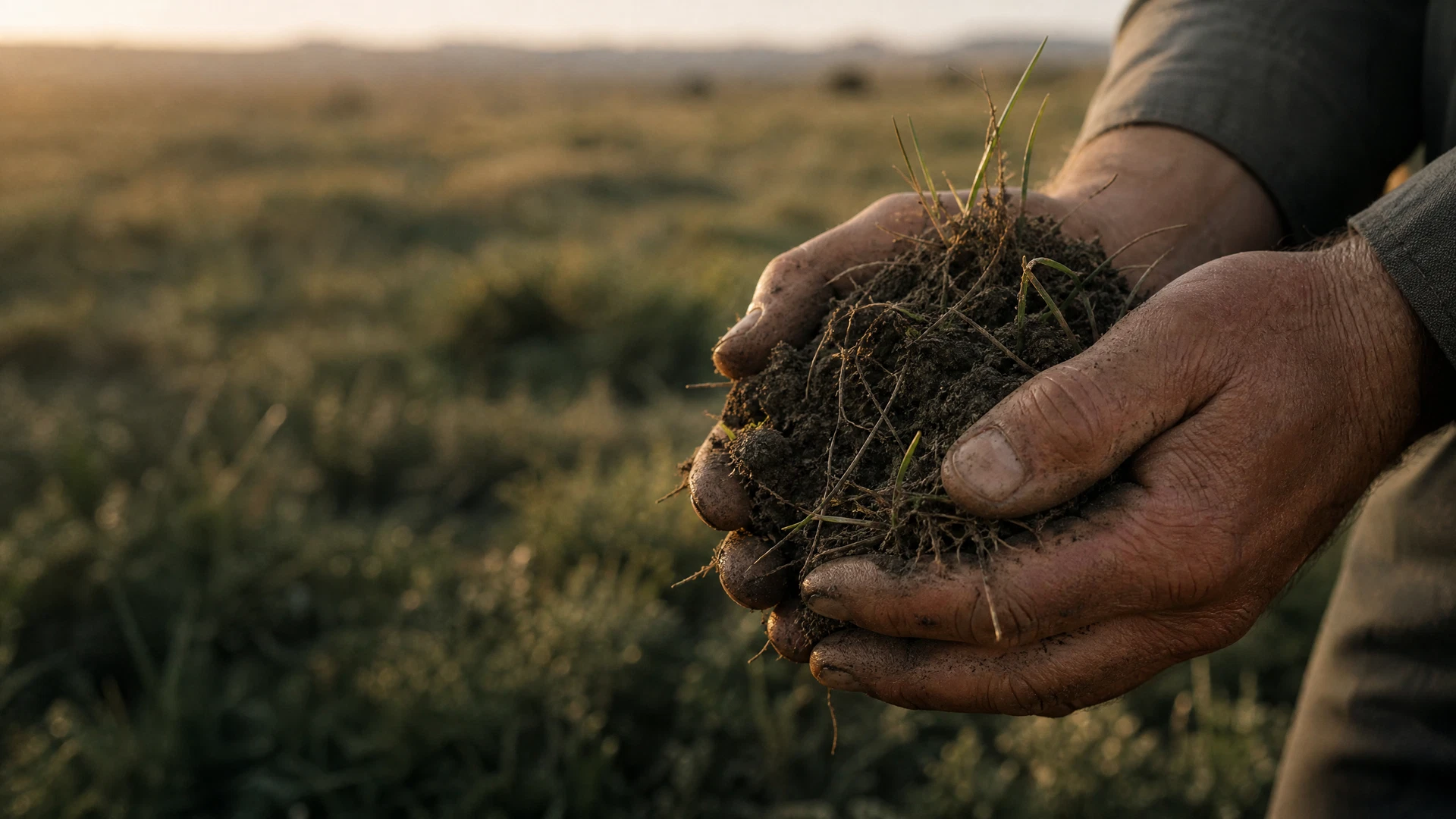
Rancher hands holding living pasture soil during a field observation
Field contextThe record begins here.

Ground Truth

The land tells more of the story.

Weather, soil, grass, handling, timing, and cattle condition all matter. We keep those facts with the record instead of boiling them down to one number.

Release Protocol

Every line needs a record behind it.

This release protocol turns a field observation into a clear, accountable public file. It protects producers from overstatement and gives readers a direct path back to the evidence.

01

Approved source document received

02

Method and measurement window reviewed

03

Attribution and operating context cleared

04

Outcome and disclosure approved for publication

Field Trial Launchpad

Start with a question worth documenting.

A strong field trial does not need to be complicated. It needs a clear decision, a useful baseline, a practical way to observe change, and a record that respects the reality of the operation.

Alpine helps turn everyday field work into evidence that can be understood, repeated, and trusted.

01

Set the decision

Name the ranch question before choosing a number to watch. The trial should help you decide what to do next.

02

Build the baseline

Capture the starting condition, comparison plan, practical constraints, and the signal that will tell you whether the program is moving.

03

Run the window

Agree on the protocol, timing, scope, and observation cadence before work begins. Keep the record close to the operation.

04

Close the record

Review the observation with its full context, document limits, and decide whether it is ready for an approved public dossier.

Bring this to the first conversation

01

The operational question you need to answer

02

Current conditions and the starting baseline

03

Product, comparison, and intended timing

04

A realistic measurement window and record owner

What Alpine Builds With You

A record that is useful before it is public.

The first output is a straightforward field-trial brief: question, baseline, protocol, observation plan, and review point. If the record earns public release, it moves into the dossier.

Evidence Intake

Put the first draft in the right hands.

Please upload the latest field-trial report, spreadsheet, laboratory analysis, or producer-approved results summary. Alpine will review the supporting documentation and update the research dossier using only verified findings, appropriate source attribution, and approved disclosures.

One file per submission. PDF, DOCX, XLSX, CSV, JPG, or PNG files up to 10 MB are accepted.
Your document is stored for Alpine’s evidence review and is not displayed on the public site from this form. Any published finding must accurately reflect the research, trial conditions, verified results, and approved disclosures.

The Alpine Evidence Standard™

Trust requires transparency.

When Alpine publishes performance evidence, readers should understand what was tested, how it was tested, what was measured, what happened, under what conditions, what limitations existed, and where the information came from.

01

Define the question

State the operation, baseline, product, and decision the work is meant to inform before the first result is collected.

02

Record the method

Document timing, application, ration or field conditions, comparison group, and anything that could shape the observation.

03

Measure with context

Report the measurement window, sample size, variability, limitations, and the difference between observation and conclusion.

04

Publish with permission

Secure attribution approval, preserve the source record, and make field-specific disclosures visible beside every public result.

Evidence labeling system

Name the level of evidence before naming the outcome.

A producer observation is not a controlled trial. An Alpine field evaluation is not independent or university research. Labels are applied only when the approved record supports them.

Alpine field evaluation

A field check documented by Alpine, with the ranch conditions and release record.

Independent research

Work done by an outside source with its author and method named.

University research

Work tied to a named university source and approved credit.

Producer observation

What a producer reported seeing. It is not the same as a controlled test.

Laboratory analysis

A lab report shown with the lab name, date, sample, and method when available.

Economic example

A dollar example based on stated assumptions. It is never a promised saving.

Future data visualization

01

Measured

A number recorded in an approved field or lab record.

No charts until approved data exists

02

Estimated

A calculated example based on assumptions shown beside it.

No charts until approved data exists

03

Observed

What someone saw in the field, without a controlled measurement.

No charts until approved data exists

Evidence Intake

Have a record that can stand on its own?

Send the approved source, field context, measurement details, and publication clearance. Alpine will build the public dossier around what the record can honestly support.

Have a question about the results?

Ask Don™

Every operation is different. Ask Don about the practical questions producers should consider when evaluating whether an agricultural technology may fit their operation.

Don is an agricultural advisor. He does not replace researchers, veterinarians, agronomists, or good records.

Ask Don™

The next question

What could better performance mean for your operation?

Research and field evidence can show what happened somewhere else. The next question is what opportunity may exist on your operation.