
Start with your operation.
Every ranch has its own story, ground, grass, cattle, and goal. Alpine starts there. We do not start with a standard sales pitch.

Humate Education
How we look at your ground, feed, cattle, and goals before we talk about a custom blend or testing.
We Start By Listening
No two operations start in the same place. Your ground, feed, cattle, weather, work, and goals shape the plan.
We build the blend talk around your ranch. Humate and zeolite may be part of it. They are not the right answer for every place, and they do not promise a result.
Responsible blending
The land, feed, and cattle are connected. We look at those links, then talk about inputs, next steps, and a plan that fit your question. We do not put you in a generic box.
Every ranch has its own story, ground, grass, cattle, and goal. Alpine starts there. We do not start with a standard sales pitch.
Humate, zeolite, and other inputs may be parts of the blend. The mix must fit the question your operation is asking.
First we name the question. Then we choose a starting point, a clear plan, a time frame, and notes that make an honest review possible.
Every result needs the weather, timing, starting point, and limits beside it. That helps another producer know what the record can and cannot mean.
What's under the EDGE?
The mineral words can sound hard. The plain truth is simple. The source and makeup of a mineral can help us ask a better question. They do not replace a clear plan or a good field record.
What it is. A broad name for natural carbon rich material studied in soil science.
Why it matters. The source and chemistry can differ, so the material needs context.
What independent science says. Independent research describes humic substances across many materials, methods, crops, and soil conditions.
What Alpine is studying. Alpine is studying how material context fits a producer question, blend discussion, and field plan.
What Alpine has validated. No Alpine finished product result is published from this term alone.
What it is. One group within humic substances that researchers describe in laboratory and field work.
Why it matters. Studies can help explain a question, but they do not prove a finished Alpine blend.
What independent science says. Independent studies report different findings because source material, rate, soil, crop, and timing can differ.
What Alpine is studying. Alpine is studying how humic acid context belongs beside the full blend, application, baseline, and conditions.
What Alpine has validated. A general humic acid paper is not treated as an Alpine product result.
What it is. Another group within humic substances with its own chemistry.
Why it matters. A label alone does not tell you what will happen on a ranch.
What independent science says. Independent science can describe fulvic chemistry and study questions without predicting every field outcome.
What Alpine is studying. Alpine is studying where this material context may help define a useful field question.
What Alpine has validated. No public Alpine outcome is assigned to fulvic acid without an approved field record.
What it is. A material often used as a source for humic substances.
Why it matters. Its makeup can vary, so the source record matters.
What independent science says. Independent sources describe leonardite as a possible humic material source, with composition that can vary.
What Alpine is studying. Alpine is studying the source and composition records needed to explain its own material clearly.
What Alpine has validated. Alpine provenance remains private until the supporting source documents are approved.
What it is. A natural zeolite mineral researchers study in agricultural settings.
Why it matters. General mineral research is not proof of an Alpine product result.
What independent science says. Independent research studies clinoptilolite in different agricultural settings, materials, rates, and methods.
What Alpine is studying. Alpine is studying how zeolitic mineral context fits the operation, formulation, application, and measurement plan.
What Alpine has validated. No Alpine performance claim is published from general clinoptilolite research alone.
From question to field record
A field check does not promise an answer. It helps us name what you want to learn and decide if a fair comparison can be made.
Designed around you
Land
Your soil, field history, moisture, and the place where an input may be used.
Feed
Your grass, ration, mineral program, timing, and what is already in the system.
Herd
Your kind of cattle, management goals, time frame, and the change you want to study.
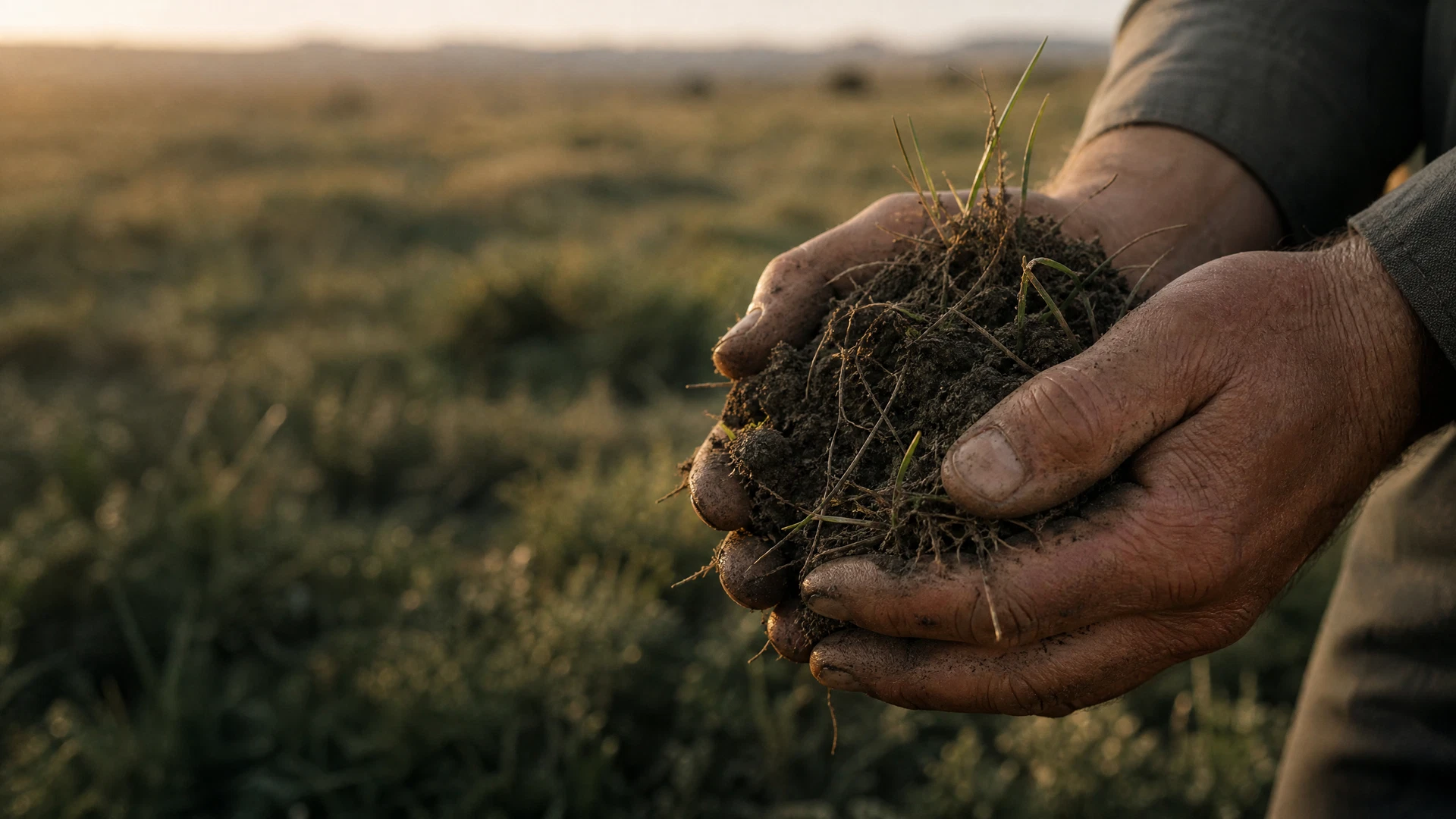
The field is where every blend conversation returns.
Field context
A custom plan matters only when it fits the work in front of you. That means the ground under your boots, the feed in the system, the cattle you manage, and the change you want to study.
Learn what the mineral words mean and the difference between an idea, a field note, and a measured result.
The Field Evidence Library keeps the starting point, trial plan, dates, limits, and source files with each approved record.
A field note can help. A measured trial can tell us more. Alpine labels each one so you know the difference.
Source context
Alpine’s practical primer is informed by public soil-science and extension guidance. These references explain the broader material and evaluation context; they are not product endorsements or a substitute for an approved Alpine Field Trial Dossier.
USDA Agricultural Research Service
Humic substances and soil organic matter
Frontiers in Agronomy
Humic acids, crop performance, and soil health
Agronomy
Natural zeolites in agriculture
Mississippi State University Extension
Adding rigor to on-farm trials
Iowa State University Extension
Conducting on-farm trials
Proof from the field